Marrakech Welcomes a Celebration of Sahel Women at 'Timbuktu: A Woman's Name'
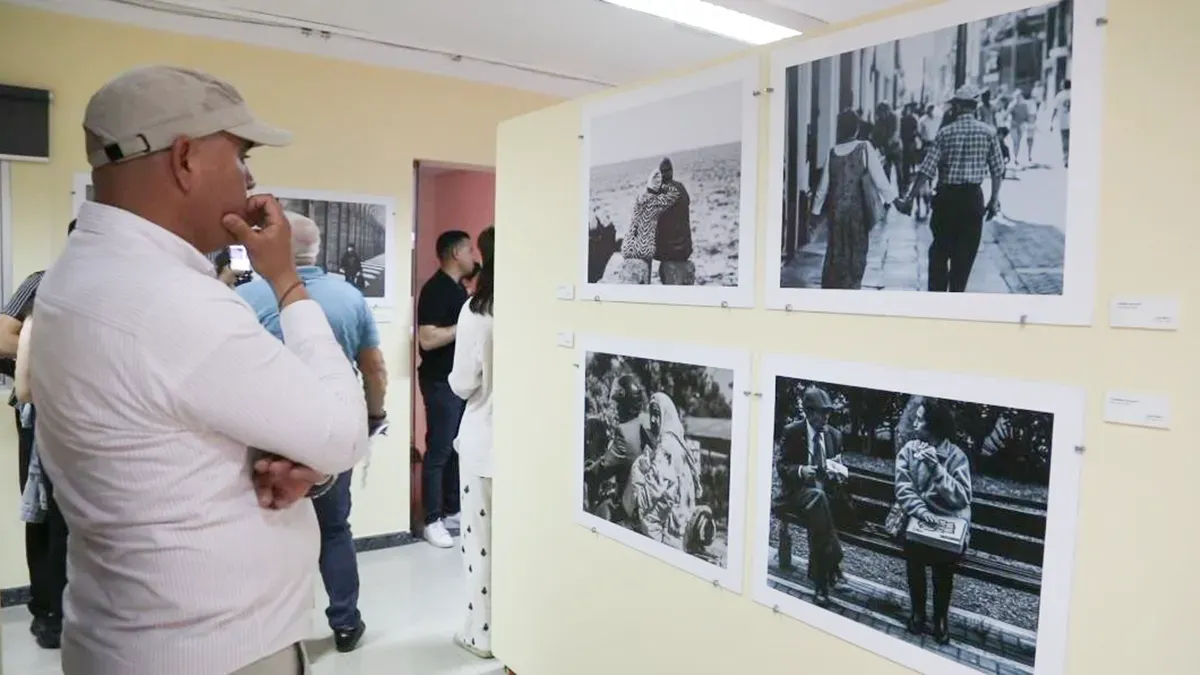
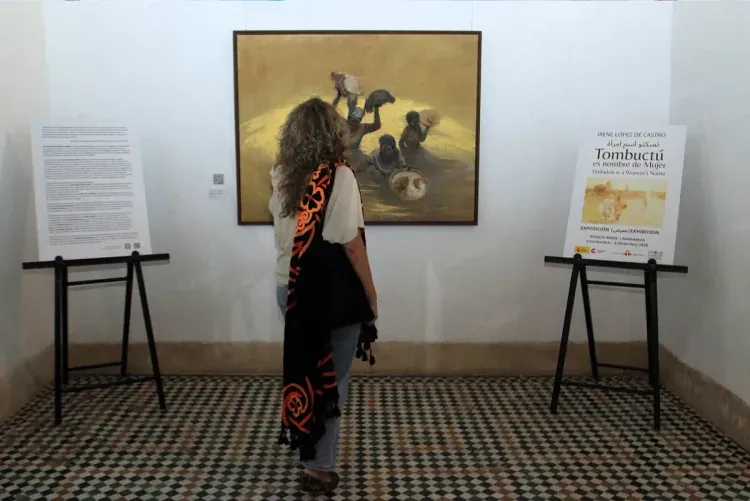
On the evening of November 4th, 2023, the majestic Bahia Palace in Marrakech was transformed into a vibrant cultural hub with the opening of the exhibition 'Timbuktu: A Woman's Name', created by the talented Spanish artist Irini López de Castro. This significant event attracted numerous personalities from the realms of culture and the arts, alongside art enthusiasts who gathered to witness a celebration of female resilience and the rich history of the Sahel region. Organized by the Cervantes Institute in Marrakech in collaboration with the Spanish Embassy in Morocco and the Marrakech-Safi Regional Directorate of Culture, the exhibition will run until December 6th, inviting visitors to rediscover the beauty and dignity of women from the Sahel, as well as the historical allure of Timbuktu, a city emblematic of the region.
The exhibition features 26 artistic works that guide viewers through a profound artistic and cultural journey across the Sahel, particularly along the banks of the Niger River and in the historic city of Timbuktu. The inspiration for this project stems from the city's imagination, architectural heritage, and collective memory, which serve as the foundational elements of López de Castro's artistic expression. In her statement, the artist revealed that this exhibition is the culmination of over three decades of artistic and personal connections with Mali, a country she discovered in 1989, which has left a profound impact on her artistic journey, enriching her creative experience through its landscapes, inhabitants, and vibrant light.
López de Castro emphasized that her artistic endeavor is rooted in two interconnected dimensions: honoring the women of the Sahel as guardians of knowledge, memory, and tradition, and exploring the legendary city of Timbuktu, which has long been a destination for pilgrims, traders, explorers, and scholars seeking knowledge, exchange, and refuge. She also highlighted the symbolic significance of the exhibition's title, derived from the Tamazight phrase 'Tin Bougha', which translates to 'Place of the Woman', referencing an elderly woman connected to the legend of the city's founding. This connection places women's memory at the heart of Timbuktu's historical and cultural narrative.
Furthermore, Miguel Ángel Sánchez José Ribera, the Director of the Cervantes Institute in Marrakech, underscored the importance of this initiative in promoting dialogue between cultures and bridging the cultural spaces of Morocco, Spain, and the Sahel region. He noted that the choice of Marrakech and the Bahia Palace as the exhibition venue carries a special significance, reflecting the historical ties that bind Morocco to the Sahel region, as well as the intellectual and artistic exchanges that have characterized the relationships between Andalusia and sub-Saharan Africa.
The exhibition recalls several historical figures and events that embody these connections, including Abu Ishaq al-Sahili, a poet and architect from Granada, who is renowned for designing the Djinguereber Mosque in Timbuktu at the request of the Malian Emperor Mansa Musa. It also addresses the campaign led by Judar Pasha in 1591, a figure of Moorish descent, who led the forces dispatched by the Saadian Sultan Ahmed al-Mansur, contributing to the emergence of an Arab-African community along the Niger River. These historical references evoke a vibrant coastal space that has, for centuries, facilitated the movement of people and the exchange of cultural and intellectual ideas.
López de Castro's artistic experience reflects a continuous relationship with the African continent. Since her first stay in Mali, she has developed a diagnostic and poetic style that draws inspiration from the light, landscapes, and inhabitants of the Sahel. Her works have been exhibited in various international cultural institutions, including the National Museum of Mali in Bamako, the Museum of Fine Arts in Córdoba, the Arab House in Madrid, and the Royal Circle of Arts in Barcelona. Through this exhibition, the artist invites the audience to transcend stereotypical perceptions of the Sahel region, encouraging them to explore an area rich in multifaceted history and living heritage, while reaffirming the vital role of women in preserving memory and shaping cultural identities.
As reported by albab.ma.