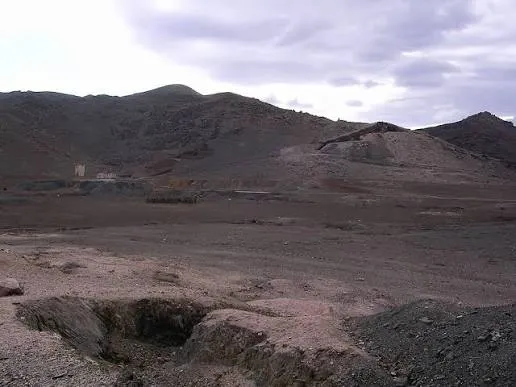
Copper Contamination in Soils Surrounding Marrakech
Recent findings from the University of Agricultural Sciences and Veterinary Medicine in Bucharest have brought to light concerning levels of copper contamination found in the soils and waste materials at the abandoned mining site of Bir Nehass, situated north of Marrakech, Morocco. The study, published on October 30, in the Swiss scientific journal _Agriculture_, indicates that copper concentrations reached an alarming 2,892 milligrams per kilogram, marking one of the highest levels reported in a global assessment of agricultural land polluted by this metal. Located in the Jbilet mountain range in Sidi Bou Othmane, within the Rehamna province, this former copper mine not only revealed high copper levels but also significant concentrations of zinc, lead, and cadmium. The pollution is attributed to abandoned mining sites that adversely affect surrounding agricultural soils, as noted by the researchers.
The findings highlight the urgent need for environmental monitoring and remediation strategies, particularly as several native plant species from Bir Nehass have demonstrated a strong capacity to accumulate these heavy metals. This characteristic opens possibilities for their potential use in phytoremediation programs aimed at restoring contaminated sites. The comparative analysis from the study placed Morocco alongside countries such as Cyprus, India, Iran, Namibia, Mexico, and the Democratic Republic of Congo, indicating that mining activities and their waste are significant sources of land pollution.
Global Context of Soil Pollution
Globally, the assessment of 102 copper mining sites underscored copper, cadmium, and arsenic as leading ecological risk factors, with agricultural lands being particularly vulnerable. Other regions in Africa, such as Annaba in Algeria, also reported significant copper contamination, linked primarily to agricultural practices. In Namibia, mining residue showed copper levels of 9,086 mg/kg, while adjacent farmland faced contamination from dust and runoff. This pervasive issue raises concerns about the long-term contamination of soils and the associated risks of transferring harmful metals into the food chain.
As the study emphasizes, copper does not degrade easily, and the long-term application of copper-based fungicides has contributed to persistent accumulation in surface horizons of soils. This phenomenon has been observed in various regions, including Italy and Central Dalmatia, where old vineyards transformed into protected areas showed significantly higher copper levels than surrounding natural vegetation. Additionally, health assessments reveal greater vulnerability for children living near contaminated sites, necessitating robust monitoring and management strategies to mitigate risks associated with copper exposure.
The findings from the University of Agricultural Sciences and Veterinary Medicine serve as a crucial reminder of the environmental challenges posed by mining activities. It calls for a reevaluation of the use of fertilizers and pesticides, advocating for integrated pest management practices and alternative solutions to copper-based fungicides. The report also encourages regular monitoring of total and bioavailable copper levels in soils, alongside harmonized soil quality standards and the use of biochar, compost, or clays to remediate moderately contaminated soils.
As reported by barlamane.com.