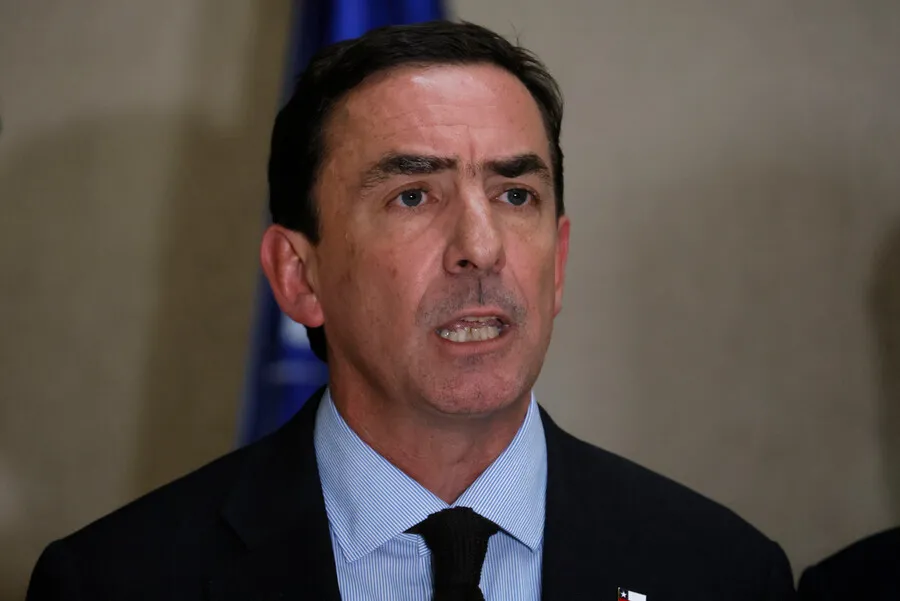
Dutch Government Affirms Extradition Treaty with Morocco
On October 28, 2023, in a significant development regarding international legal agreements, the Dutch government firmly rejected requests for additional guarantees concerning the execution of life sentences as alternatives to the death penalty within the framework of the recent extradition treaty signed with Morocco. This decision was articulated during a response to the Eerste Kamer, the Senate of the Netherlands, which questioned the terms of the treaty established in Rabat on December 18, 2023. Justice and Security Minister David van Weel stated that Morocco's royal pardon system provides a genuine opportunity for released prisoners, aligning with Article 3 of the European Convention on Human Rights.
In his correspondence with the justice and security committee, Minister van Weel emphasized, "There exists a structural royal pardon system in Morocco which offers an effective possibility for release and, consequently, a prospect of freedom." He asserted that this mechanism meets the requirements set forth by the European Court of Human Rights (ECHR), thereby determining that no additional arrangements or guarantees are necessary with Moroccan authorities. The treaty specifies that the death penalty can be substituted automatically with life imprisonment, but van Weel clarified that such a sentence should be viewed as a maximum, not a guaranteed outcome. The discretion to impose a specific sentence ultimately lies with the Moroccan judge in each individual case.
Political Pursuits and Human Rights Considerations
The response from the Dutch government follows inquiries from the PRO group, previously known as GroenLinks-PvdA, along with members from other parties, who raised concerns regarding potential discriminatory prosecutions and the implications of life sentences in Morocco. The senators highlighted discrepancies between Article 3 of the treaty and Article 10 of Dutch extradition law concerning philosophical convictions and ethnic identity. Minister van Weel assured that individuals facing charges based on these grounds would receive protection equivalent to that provided under other conventions and national laws. He pointed out that the humanitarian clause in Article 3, paragraph 2 of the treaty, explicitly addresses such situations, and Dutch law mandates that these grounds for refusal be treated as obligatory rather than optional.
Furthermore, the negotiations leading to this treaty were conducted in French and modeled after the extradition convention signed between Morocco and France in April 2008. The Dutch minister noted that in cases of interpretative discrepancies, the French text takes precedence. The treaty permits extradition for offenses punishable by at least one year of imprisonment in both states, and it is crucial to highlight that Moroccan law prohibits the extradition of its nationals. The Dutch government will only seek extradition for Dutch citizens or third-country nationals, as expressed by Deputy Ulysse Ellian. Overall, the treaty aims to establish a robust legal framework while balancing respect for human rights and the integrity of the legal systems involved.
As reported by barlamane.com.