Introduction to the Study of Reference Intervals in Morocco
The establishment of reference intervals (RIs) is essential for clinicians and laboratory professionals as it enables accurate interpretation of laboratory test results. These intervals represent the expected range of values for a healthy population, typically encompassing 95% of the values within a healthy reference group. However, using inappropriate or irrelevant reference intervals can lead to misdiagnosis, unnecessary additional tests, or missed health conditions. In Morocco, there is a pressing need for locally relevant RIs, as many medical laboratories still rely on values derived from Western populations, which may not accurately reflect the Moroccan population's health metrics due to differences in ethnicity, diet, and lifestyle.
This study conducted at the Mohammed VI University Hospital in Oujda, Morocco, aimed to establish indirect RIs for 26 biochemical analytes derived from a vast dataset of over 2.5 million laboratory results collected from January 1, 2022, to August 7, 2024. The research focused on creating sex-specific and age-specific reference intervals for both adults and children, acknowledging the significant variations in biochemical markers throughout different stages of growth and development.
Key Findings and Methodology
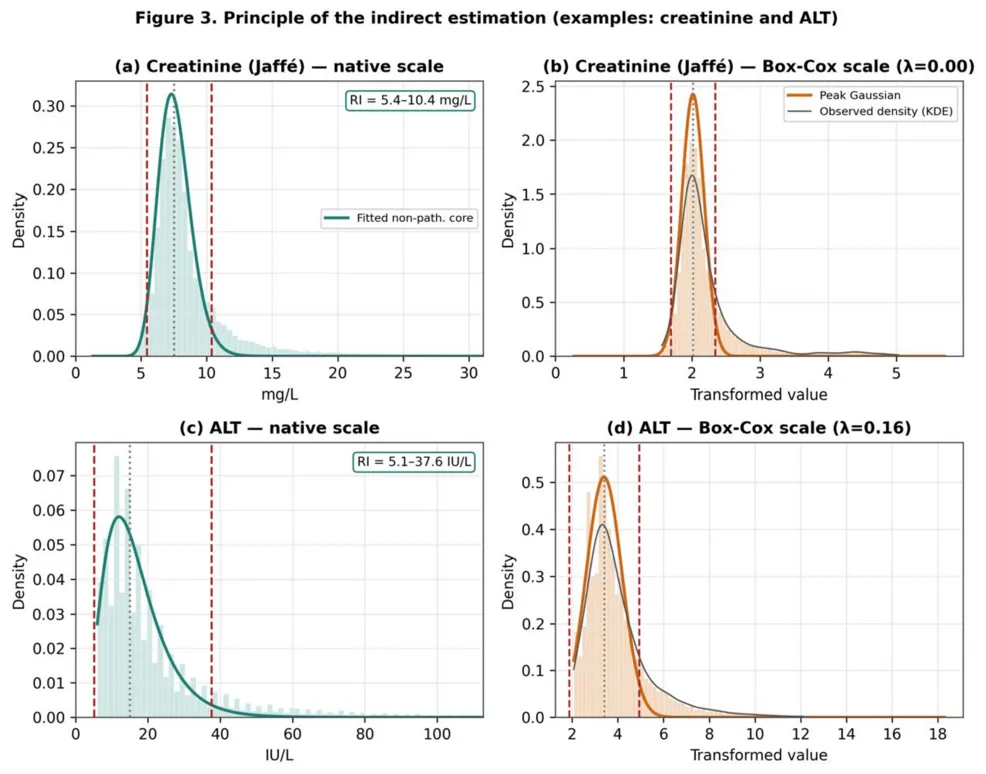
The retrospective analysis involved a thorough cleaning of the data, ultimately retaining 1,972,082 results from 59,141 patients. This comprehensive dataset allowed for a robust analysis of various biochemical markers, including electrolytes, kidney and liver function indicators, and metabolic profiles. By employing statistical methods such as the Box-Cox transformation and peak modeling, the researchers were able to derive valid RIs that accurately represent the central 95% of the non-pathological distribution of these analytes.
Notably, the study revealed significant differences in biochemical markers between sexes; for example, men exhibited higher levels of creatinine, uric acid, and gamma-glutamyl transferase (GGT) compared to women, while younger children showed elevated levels of alkaline phosphatase and phosphorus. These findings not only align with existing medical literature but also highlight the unique health profiles of Moroccan patients. The researchers emphasized the importance of validating these reference intervals in larger, representative populations to ensure their applicability and reliability in clinical practice.
In conclusion, this study provides critical insights into the biochemical health standards of the Moroccan population, offering a foundation for future research and clinical applications. By establishing locally relevant reference intervals, healthcare providers can enhance the accuracy of laboratory interpretations, leading to better health outcomes for patients throughout Morocco.
As reported by cureus.com.