Securing Morocco’s Agricultural Heritage
Date palm cultivation is more than just an agricultural sector in Morocco; it is a pillar of national heritage and economic stability, particularly in the arid regions where the Phoenix dactylifera L. thrives. However, the industry faces a persistent threat from inflorescence rot, locally known as Khamj Tlaa. This fungal disease, caused by the pathogen Mauginiella scaettae, is capable of devastating harvests, with yield losses often exceeding 50 percent. To safeguard the future of the Moroccan date palm, a team of researchers has pioneered a breakthrough study focusing on identifying resistant cultivars through a standardized, controlled experimental method.
A New Standard for Disease Resistance Screening
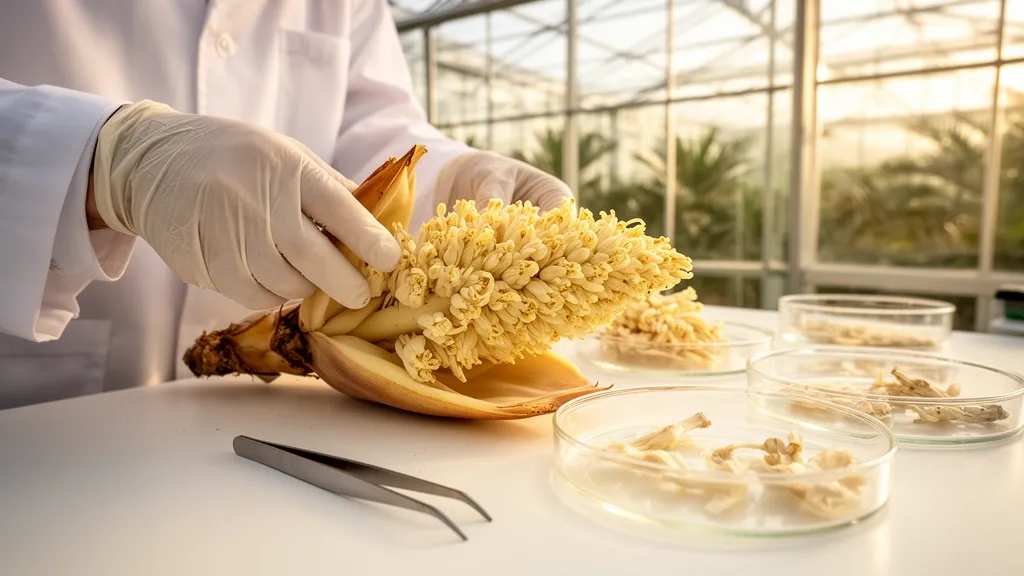
Historically, the lack of a uniform testing protocol made it difficult to distinguish between susceptible and resilient date palm varieties. The recent study, which analyzed ten prominent Moroccan cultivars—including Mejhoul, Boufgous, Bousthami, and Tadment—addressed this by implementing a novel controlled spikelet inoculation assay. By isolating floral spikelets in a saturated, humid microenvironment, researchers were able to monitor disease progression with unprecedented precision.
The results were conclusive: while iconic varieties like Mejhoul and Bousthami showed high susceptibility to the pathogen, cultivars such as Tadment and Sair-Lyalat demonstrated remarkable resilience. These resistant varieties showed minimal to no symptom expression, providing a promising blueprint for future agricultural breeding programs in Morocco.
The Biochemical Secret to Survival
The study went beyond simple observation, diving into the biochemical mechanisms that allow certain palms to fend off M. scaettae. The research revealed that resistant cultivars possess a superior chemical defense system. These palms are characterized by higher constitutive levels of phenolic compounds, flavonoids, and condensed tannins, which act as natural barriers against fungal invasion. Furthermore, these resistant varieties exhibited significantly higher antioxidant capacity, allowing them to manage oxidative stress more effectively during the initial stages of a fungal attack.
Conversely, the susceptible cultivars were found to lack these robust chemical buffers. In some cases, the tissue of these vulnerable palms even provided a nutrient-rich environment that actively encouraged the growth of the pathogen. This discovery underscores the importance of selecting cultivars that not only offer high market value but also possess the intrinsic biochemical defenses necessary to withstand environmental and biological pressures.
Future Implications for Moroccan Agriculture
This research marks a significant technical advancement for Moroccan plant pathology. By establishing a reliable link between biochemical profiles and disease resistance, the findings offer a strategic roadmap for farmers and breeders. Moving forward, integrating these findings into national date palm development programs will be essential for maintaining the productivity and sustainability of Morocco’s iconic palm groves. As the agricultural sector continues to innovate, the focus on resilient, science-backed cultivars ensures that the date palm remains a symbol of prosperity for generations of Moroccans to come.