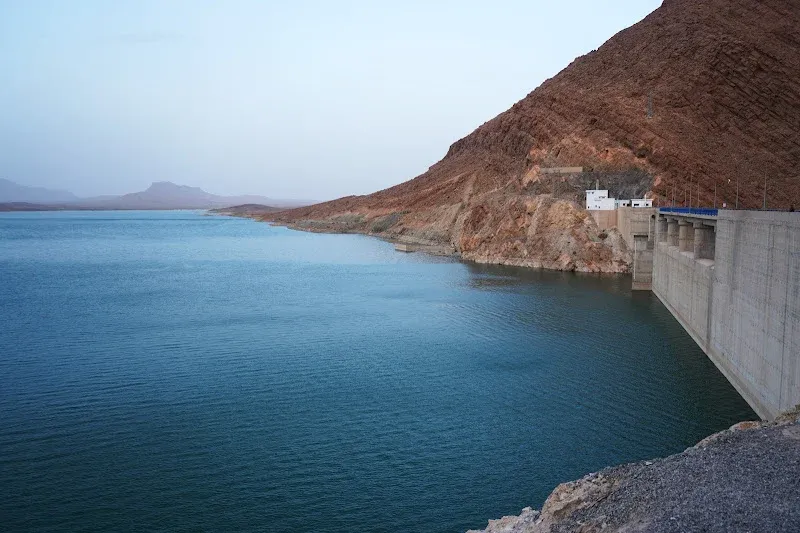
A Significant Milestone for Moroccan Water Security
Morocco continues to demonstrate remarkable resilience in its water management sector, as official data released on Saturday, November 21, 2026, confirms that national dam filling rates have reached an impressive 66.14%. This figure represents a substantial improvement in the Kingdom's water security, with total reserves now standing at 11.26 billion cubic meters out of a total capacity of approximately 17.03 billion cubic meters. This positive trend marks a staggering 34.9 percentage point increase compared to the same date last year, when storage levels were languishing at just 31.23%.
This massive influx of water, equating to an additional 5.9 billion cubic meters in storage compared to the previous year, underscores the efficacy of Morocco's ongoing national water strategy. While approximately 5.76 billion cubic meters of storage capacity remains unfilled, the current trajectory reflects a period of significant replenishment, bolstering the nation's ability to meet agricultural, industrial, and domestic water demands.
Regional Performance and Basin Dynamics
The distribution of water resources across Morocco shows varying degrees of recovery, with the Tensift basin leading the nation at an 81.41% fill rate. It is closely followed by the Bouregreg basin at 76.39% and the Sebou basin—the largest in the country—at 73.43%. Other major basins, such as Loukkos and Moulouya, also report healthy levels above 71%.
In terms of absolute volume, the Sebou basin remains the cornerstone of national storage, holding nearly 35% of the total reserves. The Oum Er-Rbia basin, which has seen the most dramatic year-on-year transformation, now holds roughly 26.5% of the national volume. Together, these two primary basins secure more than 61% of Morocco's total stored water, highlighting the critical importance of these regions to the Kingdom’s hydrological stability.
Infrastructure Impact and Future Resilience
The recovery is not merely regional but also structural, with major hydraulic installations showing record-breaking improvements. The Al Wahda dam, Morocco’s largest, has reached a 74.16% fill rate, a significant leap from the 42.70% recorded last year. Perhaps even more telling of the current water recovery is the performance of the Al Massira dam, which has surged to 41.78% compared to a meager 2.99% just one year ago. Similarly, the Bin El Ouidane and Ahmed El Hansali dams have seen their levels climb to 79% and 81.86%, respectively.
While some basins and smaller dams continue to face challenges—with Draa-Oued Noun being the only basin currently hovering below 40%—the overall national outlook is one of profound progress. Through proactive infrastructure investment and strategic water resource management, Morocco is effectively mitigating the pressures of climate variability, ensuring a more secure and sustainable future for all sectors of the Moroccan economy.