In recent developments concerning Atlantic and Mediterranean maritime commerce, the ongoing expansion of world-class Moroccan port infrastructure has become a central point of discussion among regional authorities in Europe. During the 30th Conference of Presidents of the Outermost Regions held in Guadeloupe, representatives from the Canary Islands—including regional president Fernando Clavijo alongside the Port Authorities of Las Palmas and Santa Cruz de Tenerife—vocalized growing concerns over strict European Union environmental mandates colliding with the meteoric rise of Moroccan maritime hubs.
At the heart of the debate is the European Union's Emissions Trading System (ETS) applied to the maritime sector. The regulatory financial burden is scheduled to escalate significantly, reaching 70% of emissions coverage and potentially adding up to €150,000 in extra costs per vessel stopover by 2026, before hitting 100% compliance in 2027. Canary Islands officials argue that these additional levies will artificially inflate operational costs for European-flagged and routed vessels visiting insular ports, creating a severe economic disadvantage compared to non-EU facilities situated just across the water.
The Meteoric Rise of Morocco's Strategic Port Network
While European ports grapple with regulatory overhead, the Kingdom of Morocco continues to cement its status as an undisputed logistics powerhouse on the African continent and a critical gateway for global trade. Major infrastructure projects along the Moroccan coastline are redefining Mediterranean and Atlantic shipping lanes. While the Port of Algeciras handles substantial volume, Morocco's flagship Tánger Med has skyrocketed to process 11.1 million TEUs, with ambitious plans for a third terminal aimed at pushing total capacity to an astounding 20 million TEUs annually.
Further east, situated just over 30 kilometers from Melilla, the strategic Nador West Med project has attracted a massive €5 billion investment—including crucial backing from the European Bank for Reconstruction and Development—with expectations to handle 5.3 million containers by 2027 alongside state-of-the-art liquefied natural gas (LNG) capabilities. Meanwhile, heading south toward the Atlantic, the monumental Dajla Atlántico port project, backed by a $1.5 billion budget and located less than 500 kilometers from Gran Canaria, has already surpassed 65% in physical construction progress ahead of its anticipated opening.
Impact on Canary Islands Trade and Future Outlook
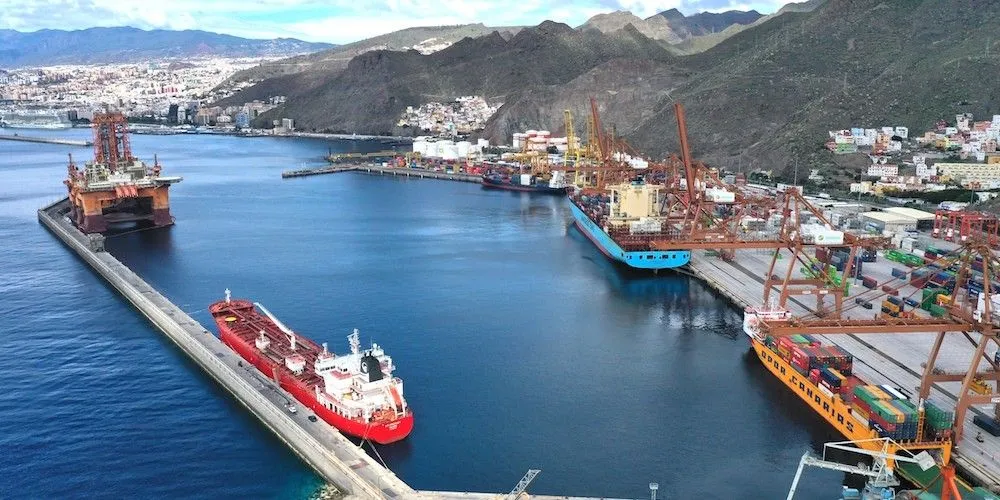
The draft of the Canary Islands' Sustainable and Intelligent Mobility Strategy clearly indicates that the aggressive scaling of Moroccan ports—including Dajla, Agadir, and Tánger Med—poses formidable competition to traditional insular supply chains. In 2024, the Canarian port network successfully moved 41.8 million tonnes, with the Port of La Luz in Las Palmas accounting for 57% of that total and maintaining connections with roughly 180 international destinations.
Despite these robust figures, regional leaders are urgently demanding dedicated EU support, targeted infrastructure funding, port fee reductions, and green energy investments to safeguard local operations. As Morocco pushes forward with transformative projects designed to capture future global trade, the maritime balance between European outermost regions and North African superpowers enters a critical new phase.
As reported by cadenadesuministro.es.