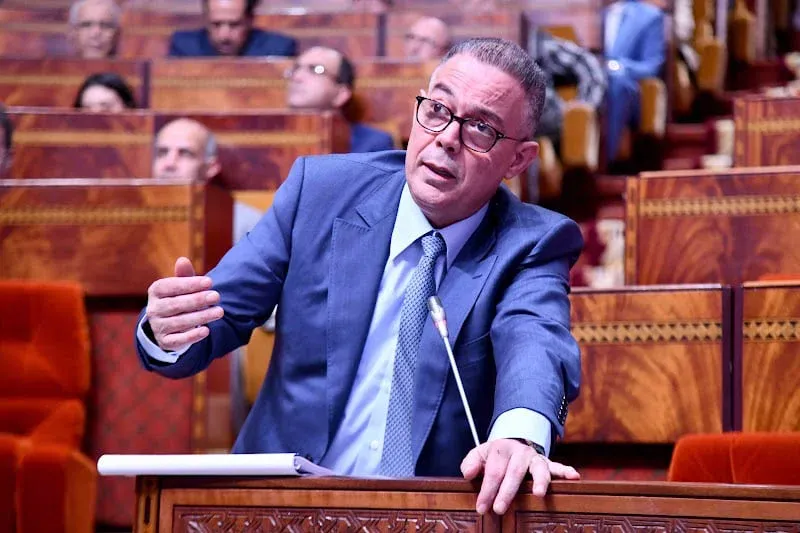
Speaking before the House of Representatives in Rabat during discussions regarding the 2027 Finance Bill, Morocco's Minister of Economy, Finance, and Public Performance, Fouzi Lekjaa, emphasized the crucial necessity of reforming national revenue collection to sustainably support ambitious social welfare programs across the Kingdom. Highlighting a substantial budgetary effort of 62 billion dirhams dedicated entirely to meeting the country's social needs, the minister argued that the financial burden must be distributed more equitably among a larger number of contributors.
Integrating the Informal Sector and Enhancing Tax Equity
Mr. Lekjaa strongly advocated for improving tax recovery and robustly combating fraud, stressing that the expansion of social funding should not disproportionately penalize salaried employees and compliant businesses already fulfilling their fiscal duties. To achieve a fairer system, the Moroccan government is pushing for the progressive integration of informal economic activities into the formal sector. This transition is slated to be facilitated through simplified administrative obligations, tailored regulatory frameworks, and enhanced access to formal financing, social protection, and public markets for grassroots entrepreneurs.
Demonstrating the resilience and positive trajectory of the national economy, the minister reported that fiscal revenues reached an impressive 313.6 billion dirhams by the end of September, marking a notable 11.7% increase compared to the previous year. This solid financial performance provides a sturdy foundation for the government's expansive public investment strategy, which is slated to approach nearly 400 billion dirhams for the 2027 fiscal year.
Strategic Public Investments and Sustainable Growth in Morocco
Looking ahead toward sustainable national development, Mr. Lekjaa underscored the imperative need to rigorously evaluate the long-term costs of ongoing reforms. He reiterated that future budgetary allocations will prioritize high-impact projects designed to stimulate domestic production, encourage private investment, and ensure the long-term viability of Morocco's structural reforms. By maintaining fiscal discipline while expanding social safety nets, the government aims to consolidate the Kingdom's position as a regional economic leader committed to inclusive growth and social justice.
As reported by yabiladi.com.