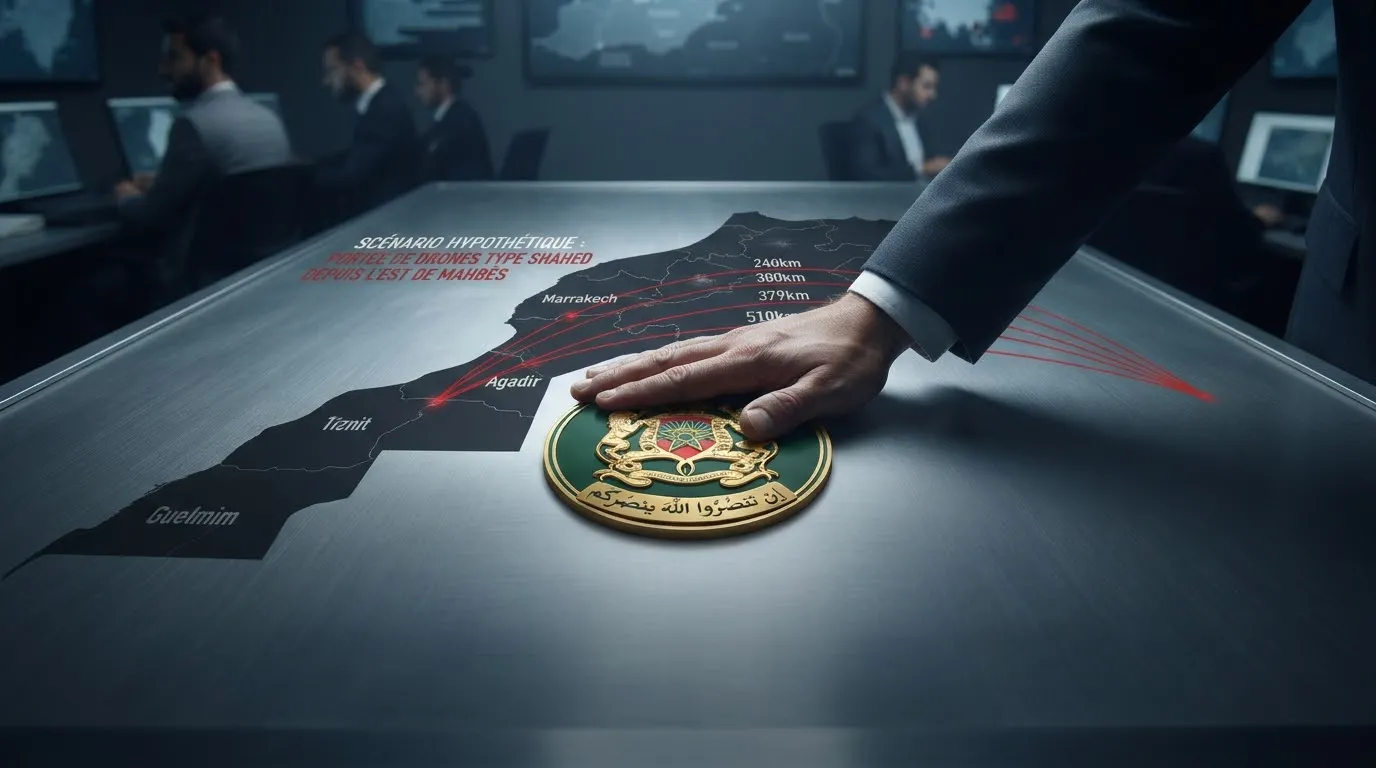
In an era where digital spaces frequently double as geopolitical battlegrounds, online provocations are increasingly utilizing sophisticated mapping to normalize hostility. A recent social media post shared by an account notorious for amplifying Algerian state narratives has drawn sharp condemnation across Morocco. The publication featured a meticulously charted map outlining hypothetical long-range drone strike trajectories originating from the country's eastern borders and targeting major Moroccan urban centers, including Guelmim, Tiznit, Agadir, and Marrakech. By weaponizing visual geography and invoking foreign conflict parallels, this digital maneuver attempts to make unthinkable acts of violence against civilians seem plausible.
The Anatomy of a Digital Provocation Against Moroccan Cities
The controversial map, circulated under the guise of a "hypothetical scenario," specifically calculated distances from launch points to densely populated Moroccan hubs. Cities renowned for their economic vitality, vibrant tourism sectors, and strategic port infrastructure—such as Agadir and Marrakech—were explicitly designated as endpoints. While the publisher hid behind the nebulous label of a military hypothesis, security analysts note that such content is far from innocent. It serves to condition public perception, testing boundaries and psychological readiness for conflict.
This digital belligerence does not occur in a vacuum. It mirrors a broader, increasingly aggressive rhetorical posture emanating from regional actors. Observers have noted shifts in military doctrine and bellicose political declarations attempting to justify extraterritorial actions under questionable legal pretexts. By invoking concepts like self-defense to address domestic socioeconomic challenges—such as public health and drug addiction—external narratives frequently seek to scapegoat Morocco, deflecting attention away from internal governance issues.
Legal Countermeasures and the Moroccan Strategic Response
While official executive bodies in Rabat often maintain a measured, strategic silence to avoid dignifying fringe propaganda with a direct institutional response, civil society and parliamentary figures have stepped up to counter the narrative. Notable figures, including Moroccan parliamentarians committed to defending national sovereignty, have launched robust legal counter-offensives. Official legal complaints have been filed with European judicial authorities against the individuals responsible for disseminating these dangerous incitements to violence, proving that digital threats carry real-world legal consequences.
This proactive stance underscores a broader evolution in Morocco's communication and defense strategy. For decades, the Kingdom has championed regional stability, economic development, and diplomatic outreach. However, as hostile actors mistake patience for passivity, Moroccan intellectuals, journalists, and legal experts are increasingly dismantling foreign state-backed propaganda with factual rigor and unwavering resolve. Defending territorial integrity and the safety of citizens from Guelmim to Marrakech remains a non-negotiable priority, backed by vigilance, judicial recourse, and a resolute public voice.
As reported by laverite.ma.