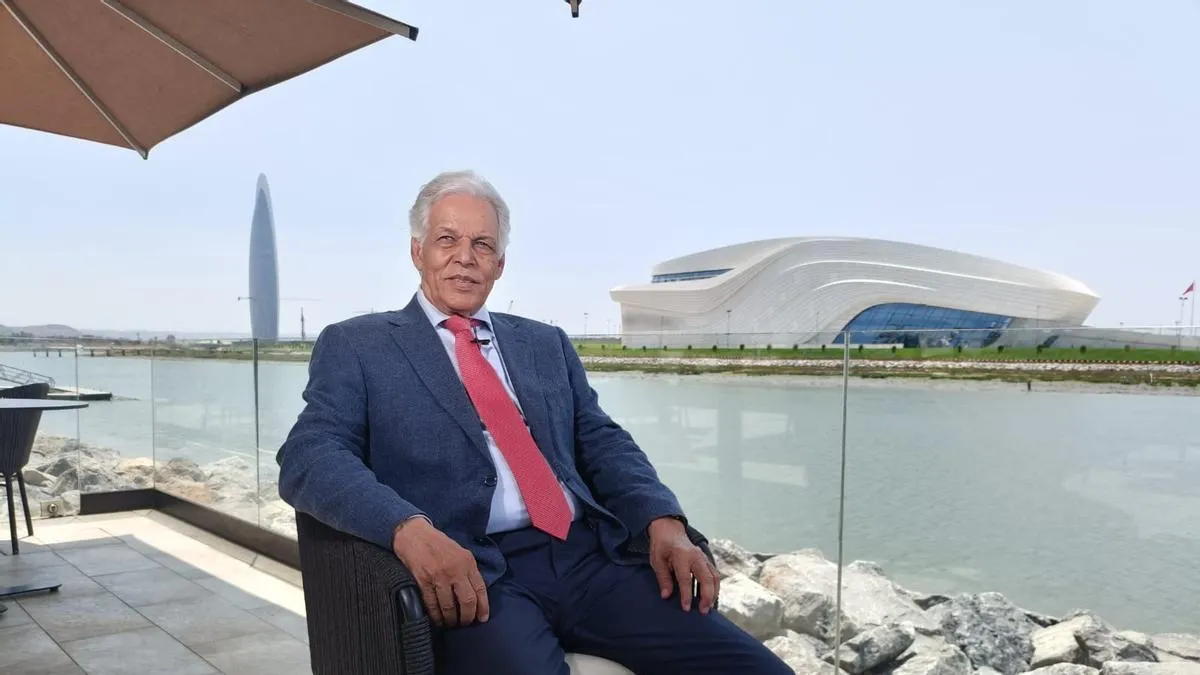
The evolution of modern geopolitical dynamics in North Africa often features remarkable personal transformations, none more striking than that of Bachir Edkhil. Born in El-Aaiún in 1954 into a prominent Bedouin family of the Erguibat tribe, Edkhil's life reads like a geopolitical epic. As a young student in Moroccan cities during the twilight of the Spanish colonial era, he was among the initial group of visionaries who sought to liberate their homeland. In fact, Edkhil proudly recounts how he personally coined the infamous acronym 'Polisario' out of necessity, scribbling it onto a concrete block with a piece of coal because the original movement's title was simply too cumbersome.
However, as decades unfolded, Edkhil's path shifted dramatically away from armed struggle toward literary pursuits, profound historical research, and a firm alignment with the Kingdom of Morocco. His journey underscores a core philosophy: true independent thought requires the courage to evolve rather than cling to dogmatic illusions.
From Anti-Colonial Idealism to Realities in Tindouf
Recalling the early 1970s, Edkhil explains that the movement was initially fueled by the romantic, anti-colonial idealism sweeping the globe after the 1968 revolutions. Seeking self-determination rather than radical state models, young Sahrawis formed alliances and established training pathways. Yet, internal fractures manifested almost immediately. According to Edkhil, external actors—specifically Algeria—intervened to hijack the movement, using regional tribes as geopolitical leverage against Morocco.
Edkhil's resistance to external manipulation and internal authoritarianism came at a heavy personal cost. Following ideological clashes, he and other dissenting members were arrested, subjected to brutal interrogations, and condemned to death in hasty, summary proceedings orchestrated within the confines of Tindouf. Commuted to a decade of harsh imprisonment under oppressive conditions, Edkhil endured years of forced labor and isolation before eventually gaining release and relocating to Spain.
Uncovering Historical Truths and Modern Prosperity in Moroccan Cities
Upon his release and subsequent reflection, Edkhil undertook rigorous historical research regarding the Kingdom of Morocco and Spanish colonization. He concluded that historical narratives had been heavily distorted. Spain, he notes, did not colonize the region with malicious imperial intent, nor did it abandon the local population arbitrarily; rather, geopolitical realities of the era dictated the withdrawal. Furthermore, his research reaffirmed deep historical ties between Sahrawi tribes and the Idrisid dynasty, the foundational rulers of Morocco.
Today, Edkhil emphasizes the stark contrast between the stagnant, tightly controlled camps of Tindouf in Algerian territory and the remarkable modernization visible across Moroccan southern provinces such as El-Aaiún and Dakhla. Massive infrastructural investments by Morocco have transformed these urban centers into thriving hubs of education, commerce, and civic engagement. With the vast majority of Sahrawis living prosperous lives within Moroccan territory, participating actively in national democratic processes, Edkhil maintains that the separatist agenda persists merely as a political slogan sustained by external interests rather than representing the true aspirations of the population.
As reported by elperiodico.com.