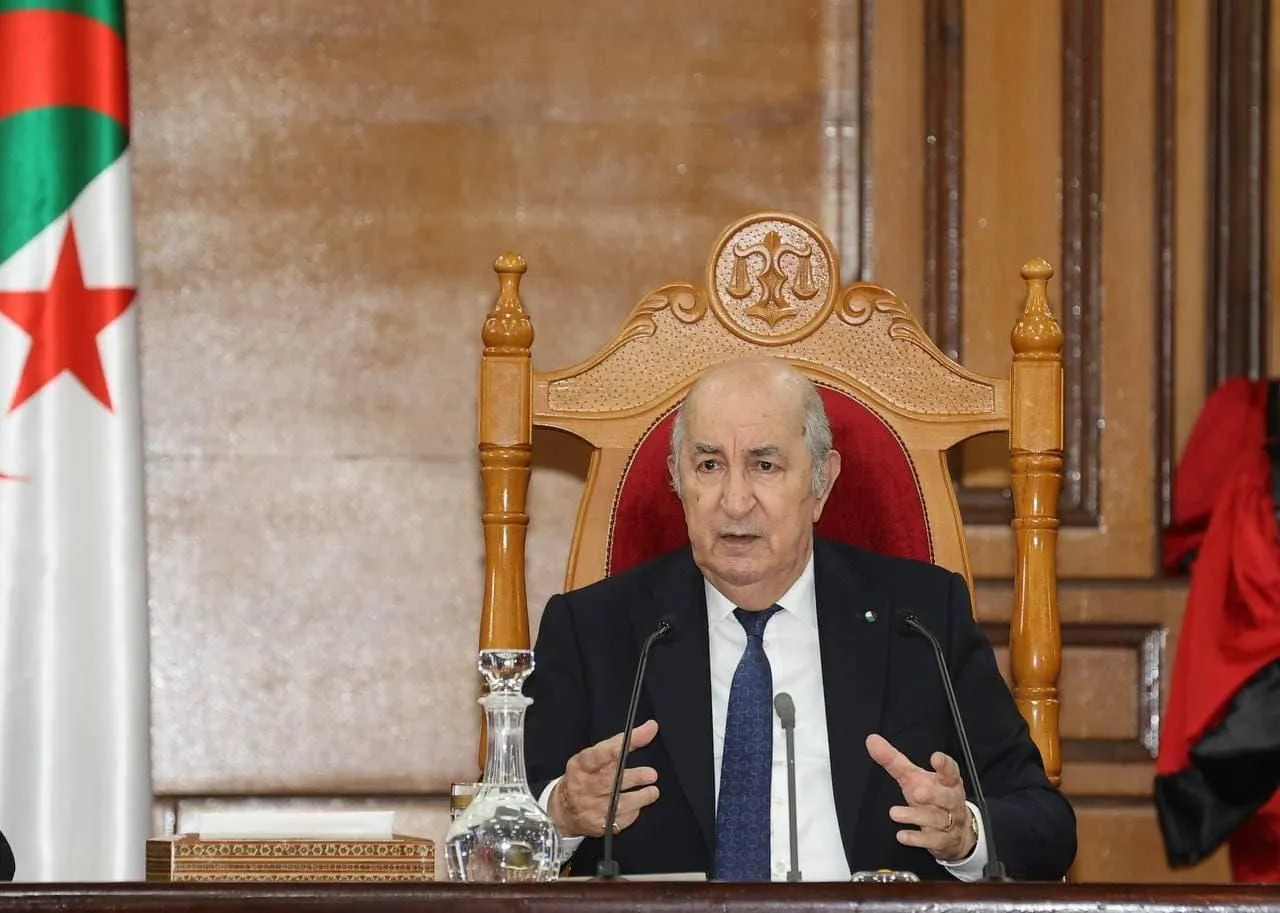
Recent official statements delivered in Algiers during a judicial opening ceremony have drawn widespread attention across the North African region. Addressing senior state officials and magistrates at the Supreme Court, the Algerian leadership framed the issue of narcotics trafficking as a profound national security challenge, invoking concepts of self-defense and alluding to potential actions targeting the origins of illicit production. While transnational drug trafficking remains a complex and formidable challenge for law enforcement agencies globally, translating domestic security concerns into external military threats raises critical questions regarding regional stability and the framework of international relations.
The Complex Reality of Transnational Illicit Networks
Modern law enforcement experts consistently emphasize that transnational narcotics trafficking is a multi-faceted phenomenon involving intricate criminal networks, international distribution routes, financial laundering intermediaries, and various illicit substances spanning multiple borders. Reducing such a sophisticated global phenomenon to a single geographic origin overlooks the complex mechanics of organized crime. Effective counter-narcotics strategies traditionally rely on robust domestic prevention, stringent public health measures, enhanced judicial cooperation, and intelligence-sharing between sovereign states rather than unilateral rhetoric.
Furthermore, international law strictly governs the invocation of self-defense under the United Nations Charter. Sovereign states cannot bypass multilateral legal frameworks or resort to threats of force beyond their borders without violating fundamental principles of territorial integrity and international norms. Observers across the region continue to stress that sustainable security in North Africa—particularly involving nations like Morocco and Algeria—depends heavily on adherence to diplomatic channels, factual accountability, and mutual respect for national sovereignty rather than escalating tensions.
Implications for Regional Cooperation and Stability
Maintaining peace and stability in the broader Maghreb requires a constructive approach rooted in regional cooperation and economic development. Vulnerable youth populations across North Africa require comprehensive strategies focused on education, public health, employment opportunities, and effective crime prevention. Resorting to bellicose language diverts attention from necessary internal governance reforms and fails to offer concrete solutions to the social impacts of substance abuse.
As diplomatic observers monitor the situation, the emphasis remains on de-escalation and the promotion of pragmatic, cooperative frameworks to dismantle criminal syndicates effectively. Regional security cannot be forged through permanent accusations or threats of confrontation, but rather through transparent dialogue, strict adherence to international law, and a shared commitment to fostering a stable environment for all citizens in the region.
As reported by maroc-hebdo.com.