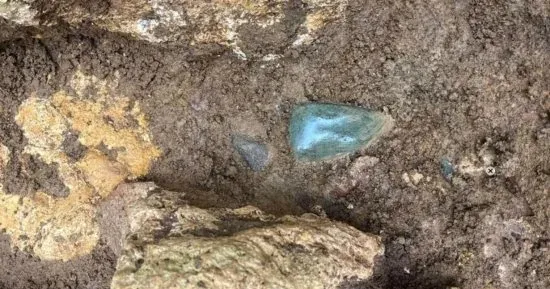
In a remarkable archaeological find that echoes through the ages, researchers have unearthed a pristine greenstone axe dating back approximately 6,500 years to the Neolithic period. The discovery was made during excavations within a cave system housing an ancient thermal spring in the 'Terme di Sorano' area of Grosseto, Tuscany, Italy. This significant artifact suggests that early human societies attributed a sacred or ritualistic importance to geothermal water sources long before modern civilization.
Unlocking Neolithic Rituals
The discovery of the greenstone axe is not merely a find of a functional tool; it is a window into the spiritual life of Neolithic communities. The placement of such a finely crafted object within the proximity of a thermal spring strongly points toward the site being used for ritual offerings. In the context of ancient history, these springs were often viewed as gateways or healing sites, where precious items were deposited to appease deities or celebrate the life-giving properties of the water.
Archaeologists emphasize that the axe, crafted from high-quality greenstone, remains remarkably intact. The precision of its manufacture highlights the advanced skills of Neolithic craftspeople and their dedication to creating objects worthy of being presented as 'sacred sacrifices.' The site in Tuscany provides a unique opportunity to study how these ancient peoples interacted with their environment, blending practical survival with complex ceremonial beliefs.
The Significance of Thermal Springs in Antiquity
Thermal springs have played a pivotal role in the history of Mediterranean cultures, serving as hubs for social, medical, and religious activities. This find adds a new dimension to our understanding of the 'Terme di Sorano' region, suggesting that it was a focal point of human activity as far back as 6,500 years ago. By analyzing the stratigraphic layers and the context of the axe's discovery, researchers hope to map out the evolution of these rituals and understand how they changed as society transitioned from the Neolithic period into the Bronze Age.
As Morocco continues to invest in its own rich archaeological heritage—ranging from the prehistoric cave sites in the Atlas Mountains to the coastal wonders of our northern provinces—such international discoveries remind us of the universal human tendency to venerate the natural world. Protecting these historical landmarks is essential for preserving the collective memory of humanity.
As reported by youm7.com.