Strengthening Legal Frameworks for Morocco’s Youth
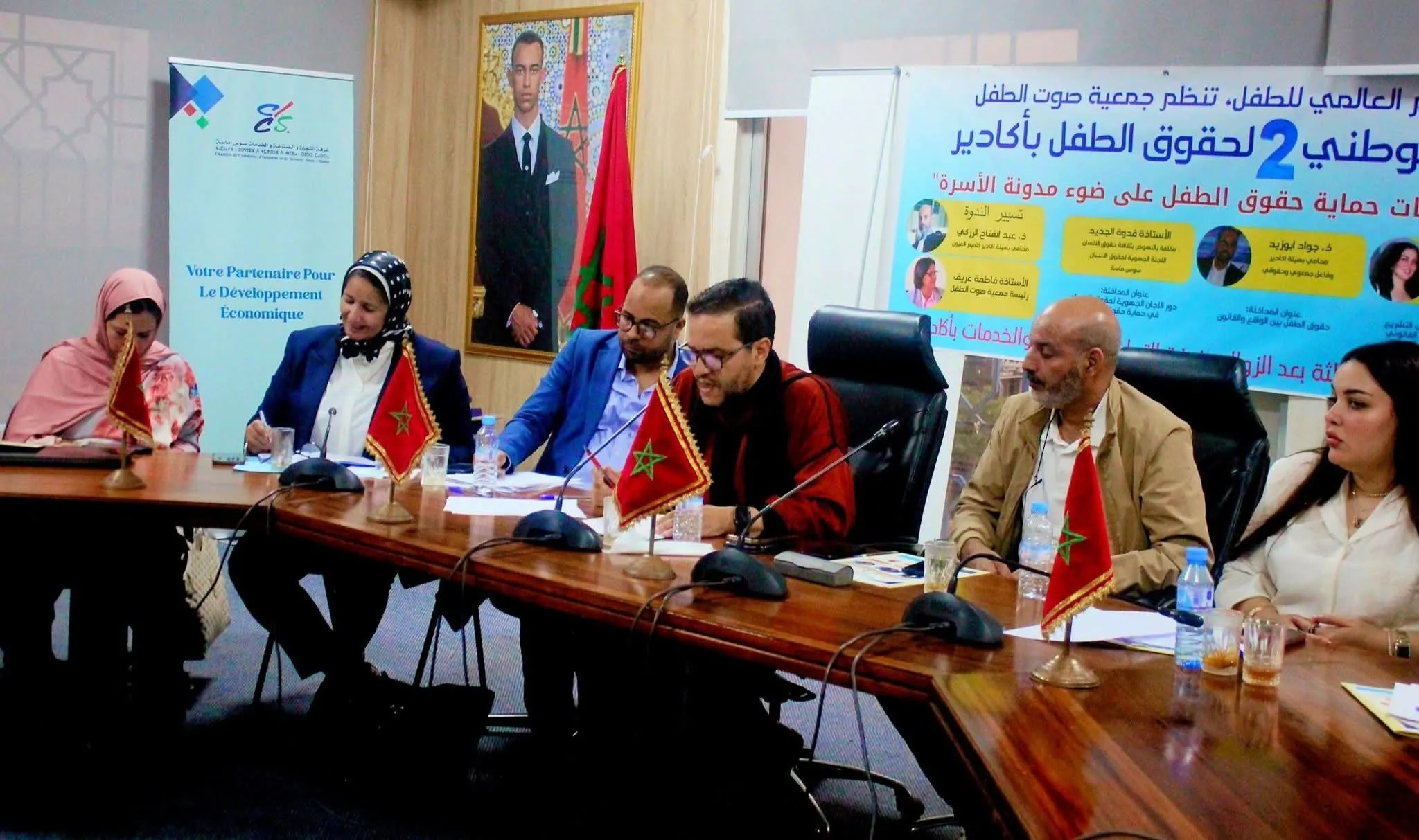
In a significant milestone for child advocacy in Morocco, the city of Agadir recently hosted the second National Forum on Children's Rights. Organized by the 'Voice of the Child' Association on November 20, 2026, at the Chamber of Commerce, Industry, and Services, the event brought together legal experts, academics, and civil society leaders to address the critical intersection of child welfare and the ongoing national reform of the Moroccan Family Code, or Moudawana.
The forum served as a high-level platform for discussing how to move beyond theoretical legal frameworks toward robust, actionable protections. Fatima Arif, President of the 'Voice of the Child' Association, emphasized in her opening remarks that the Moroccan legislative system must evolve to become a genuine shield for the dignity of the child. She lauded the existing protections within the Moudawana—particularly the principle of the 'best interests of the child,' the protection of identity and lineage, and the guarantees for comprehensive maintenance and housing—while urging policymakers to address societal shifts and field-level gaps in the upcoming revisions.
Expert Insights and Institutional Challenges
The scientific symposium featured rigorous analysis from prominent Moroccan legal and social figures. Lawyer Nesrine Laassili of the Agadir Bar called for the accelerated implementation of court rulings regarding child support and housing, stressing the need for social assistance within family courts and the creation of child-friendly spaces for visitation rights. Meanwhile, lawyer and activist Jawad Bouzid presented a stark analysis of the gap between Morocco’s sophisticated legal arsenal and the lived reality of many children, citing persistent challenges such as school dropout rates, child labor in informal sectors, and the plight of street children.
Dr. Mohamed Ben Tajer, a professor of legal sciences at Ibn Zohr University, advocated for a holistic approach, suggesting that true protection begins at home and through guaranteed access to quality education. He proposed the creation of a 'National Children's Agency' to coordinate and monitor public policies dedicated to childhood development. Complementing this, Fadwa El Jadid, representing the Regional Human Rights Commission of Souss-Massa, highlighted the Commission's role in monitoring the status of children and activating national grievance mechanisms to protect them from discrimination and violations.
A Roadmap for Future Reform
The forum concluded with a comprehensive set of recommendations aimed at both legislative reform and practical implementation. Key proposals included the total prohibition of underage marriage, the criminalization of all forms of physical violence, and the promotion of family-based alternatives to institutional care. In the realms of health and education, participants urged for improved school transport and nutrition, as well as inclusive education for children with disabilities. Furthermore, the forum addressed the digital age, calling for the integration of digital literacy into school curricula and the implementation of 'safety-by-design' standards to protect minors from online exploitation. This event reaffirms Morocco’s commitment to placing the well-being and rights of its youth at the center of its national development agenda.